Welding repairs to corroded
panels.
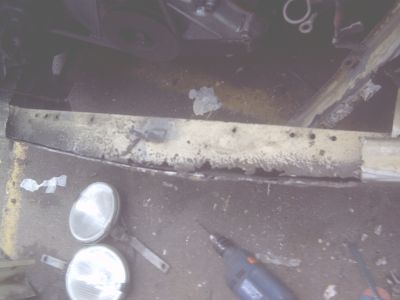
The front panel on this Mk1 ford transit was
weak and holed. The cross member behind it was also rotten and full
of lose scale and debris which could be heard rattling about
inside the box section.Removing the top of the front valance revealed the
cross member behind it had corroded through at the front edge where it met
the front panel.This is a structural part of the vehicle so had to be
repaired by letting in new metal.
|
 |
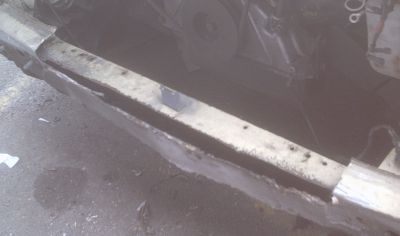 |
First job was to tidy up the holes cutting out
the rust and getting back to sound metal with an angle grinder.The front
panel had been repaired in the past by simply plating over the
holes,effectively sealing in the rust.These old repairs were removed and
the edges of the front panel were then cut back to sound metal and squared
off. |
|
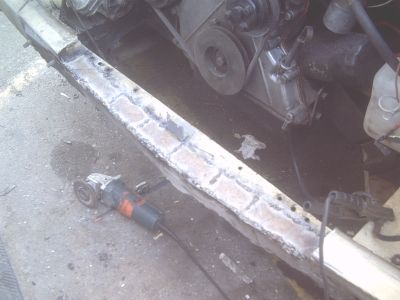
A strip of metal long enough to cover
the resultant hole was cut,at the front a 1/2 inch flange was
bent over to meet with the bottom of the front panel.As this section of
the front panel is curved 'V' sections were cut out and
the replacement section curved to fit,when the fit was OK the
cut sections were seam welded together and the new section tacked into
position.A few adjustments and then the new section was seam welded
to the cross member and front panel. |
 |
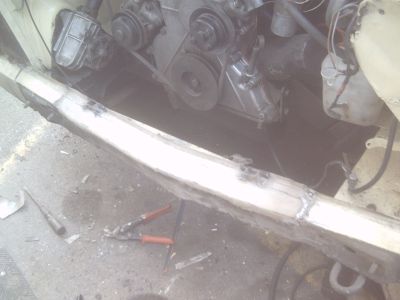 |
A new section of front panel was then welded
into place.The curved section was formed by hammering a strip of sheet
steel over a wooden block to shape it.Sheet metal that has been
shaped in this way is more resistant to bending than flat section and
contributes to the rigidity of the structure.It's important to protect all
repaired areas from corrosion as soon as possible.
Removing rusted fittings and
fixings.
. |
Repairing rust holes with
fibreglass.
Easier than welding but not
suitable for structural areas.
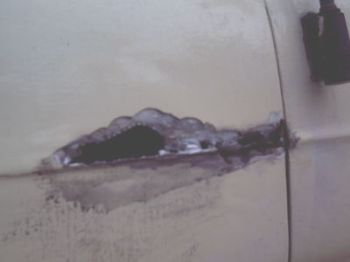
A small rust bubble on a front wing turned into a larger
hole when attacked with an angle grinder.This damage is not in a
structural area.The rest of the wing was sound and to minimise paint
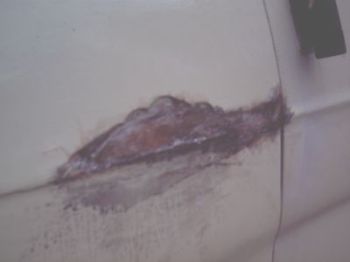
damage fibreglass was used on the repair.The hole was enlarged,cutting
back to sound metal and the whole area treated with a rust
remover/convertor.The area was then carefully dented so that a layer of
glass and resin could be applied without it standing proud of the original
contours. |
 |
 |
Fibre glass resin and mat was applied to the
cleaned rear of the panel and when set other layers were applied to build
up thickness.The repaired area was strong and will not rust although
eventually some corrosion will probably make its way through
elsewhere. |
|
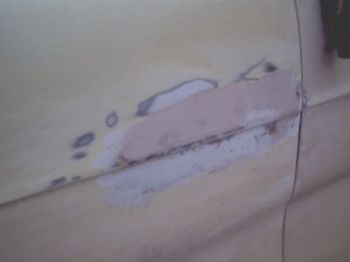
A skim of filler and the wing is ready for
paint.Most car filler is porous and absorbs water so it should be
protected by primer and top coat as soon as possible.Body filler
should be applied to bare metal or fibre glass,it will not key well to
existing paint.The area behind this repair was easily accessible and
treated with a rust preventer then painted,this should keep it sound for a
fair time |
 |
 . . |
Welding repairs to
bodywork.
A Mercedes 307D with a rotted out windscreen
surround.
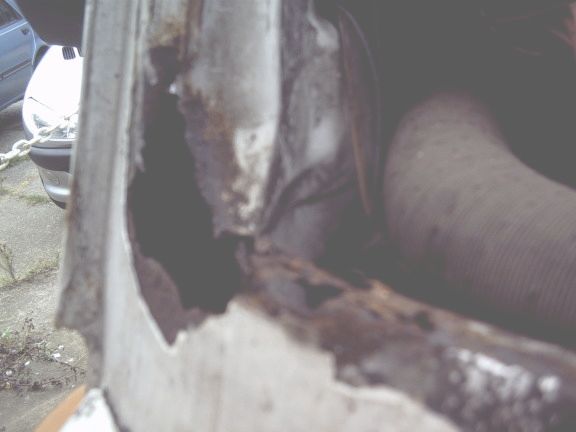
This shows what rust
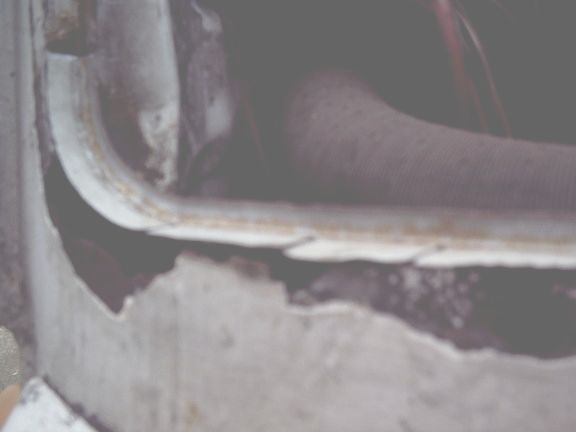
and corrosion can lurk under rubber mouldings.Taking the cracked
windscreen out of an old merc revealed this hole.Most of the metal the
screen rubber fits into was missing.Rot round a screen surround is
bad news and often difficult to repair. Before removing the screen
and again before starting to remove the corroded metal lots of card
patterns were made to provide a record of the shape.As the windscreen and
rubber fit into the recess it needs to be accurately shaped to avoid
causing still more leaks.I found similar corrosion when taking the screen
out of my old London taxi,water leaking
behind screen rubbers usually finds its way into the interior of the
vehicle causing corrosion to spread in other areas. |
|
As the shape was quite complex with various
curves small pieces of steel were welded to the back panel leaving what
was left of the front in place to give a guide to the shape and
length.This was easier than trying to form the missing section from a
single piece of steel.When finished the small sections were welded
together |
. |
 |
|
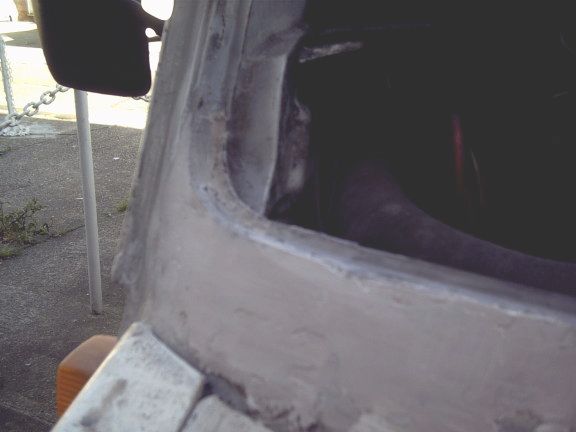
Covered with a skim of filler the panel looked better and
at least should hold the windscreen in place.Repairs should be primed,then
covered with a gloss paint for complete protection as quickly as possible
and this should be done on a dry day.Primer or filler are both porous.Damp
steel corrodes very quickly and metal that has been welded corrodes at an
alarming rate if it is not covered and
protected.. |